Lumen: An Essential Factor in Choosing the Right Lightning
.png)
Lumen : An Essential Factor in Choosing the Right Lightning
When choosing a light fixture, people often focus on its design or colour temperature. However, another factor deserves just as much attention: the lumen. It indicates the amount of light emitted by a light source and directly influences the lighting level in a space.
How many lumens do you really need? Is a higher value always better? To make an informed decision, it's important to first understand what a lumen actually measures.
What Is a Lumen?
Simply put, a lumen (lm) is the unit of measurement used to indicate the amount of light emitted by a light source. The higher the lumen value, the brighter the light produced.
It's important not to confuse lumens with watts (W). While lumens measure the amount of light produced, watts measure the amount of energy consumed by a light bulb or fixture.
In other words, watts tell you how much energy you use, while lumens tell you how much light you get.
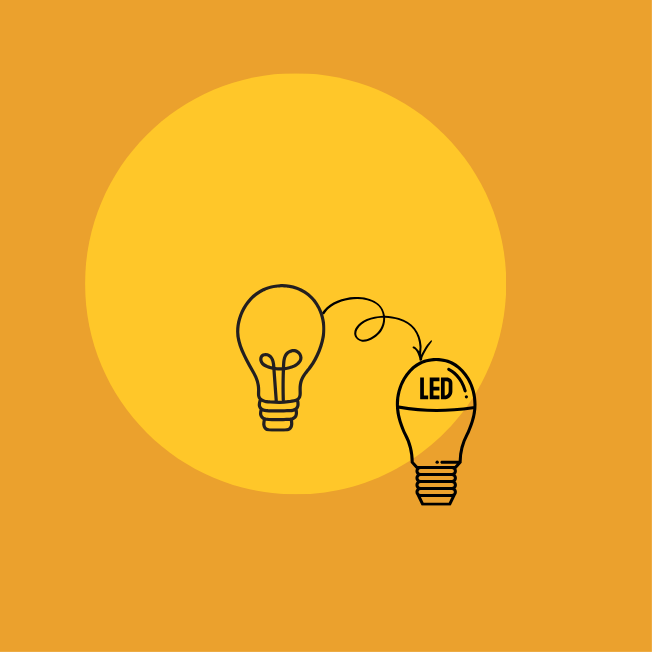
why Do we talk about lumens instead of whatts ?
For many years, wattage was the main reference point when choosing a light fixture or replacing a light bulb. The higher the wattage, the brighter the light was expected to be.
This was true with older lighting technologies. However, the arrival of LED lighting has completely changed the way we evaluate lighting. Today, two light bulbs can produce the same amount of light while consuming very different amounts of energy. As a general rule, a LED bulb uses two to three times less energy than older lighting technologies while providing a comparable level of brightness.
How Do You Choose the Right Lumen Output ?
It's easy to assume that brighter lighting is always better. In reality, as with many aspects of lighting, it's all about balance. The goal isn't to produce as much light as possible, but rather to create an environment that's suited to the intended use of each space.
Take an office, for example. When a workspace feels uncomfortable, people often assume that the colour temperature is to blame. However, the real issue may simply be excessive brightness. A lumen value that is too high can create a harsh environment and contribute to eye strain, even when the colour temperature is appropriate.
The same principle applies in a warehouse. Unlike a manufacturing facility or a quality control area, where powerful lighting is needed to inspect fine details, the primary purpose of warehouse lighting is to help workers identify aisles, pallets, and storage locations. An excessively high lighting level doesn't necessarily provide any additional benefit. On the contrary, it can increase visual discomfort for employees who spend long hours in the space, particularly those operating forklifts.
By selecting the appropriate lighting level for each environment, it's possible to improve occupant comfort, support productivity, and reduce energy consumption without compromising safety.
Looking beyond lumens
Lumens are an essential factor when choosing lighting, but they're only part of the equation. Creating a comfortable environment that's tailored to your needs also requires considering other important factors, such as colour temperature and the Color Rendering Index (CRI).
To learn more, we invite you to read our articles "How to Choose the Right Lightning Color for Your Spaces" and "What Is CRI (Color Rendering Index) and Why Does It Matter?."
Planning a lighting project or looking for personalized advice? Our team is here to help you choose high-performance, long-lasting lighting solutions tailored to your needs. Feel free to contact us by phone at 514-356-3222 or by email to discuss your project.
get things going