Switching to LED Lightning: Is It Really Cost-Effective?
.png)
Switching to LED Lightning: Is It Really Cost-Effective?
At first glance, switching to LED lighting represents a greater investment than simply replacing a bulb or a component in an existing fixture. However, to determine which option is truly the most economical, it is important to look beyond the purchase price. Electricity consumption, maintenance, lifespan, installation and rebates can all influence the equation. That is where return on investment (ROI) comes into play.
In our latest article, we discussed the regulatory changes affecting certain mercury-containing lamps, as well as the main LED solutions available to replace them. This time, let’s look at the transition from another perspective: cost-effectiveness.
how is return on investment calculated?
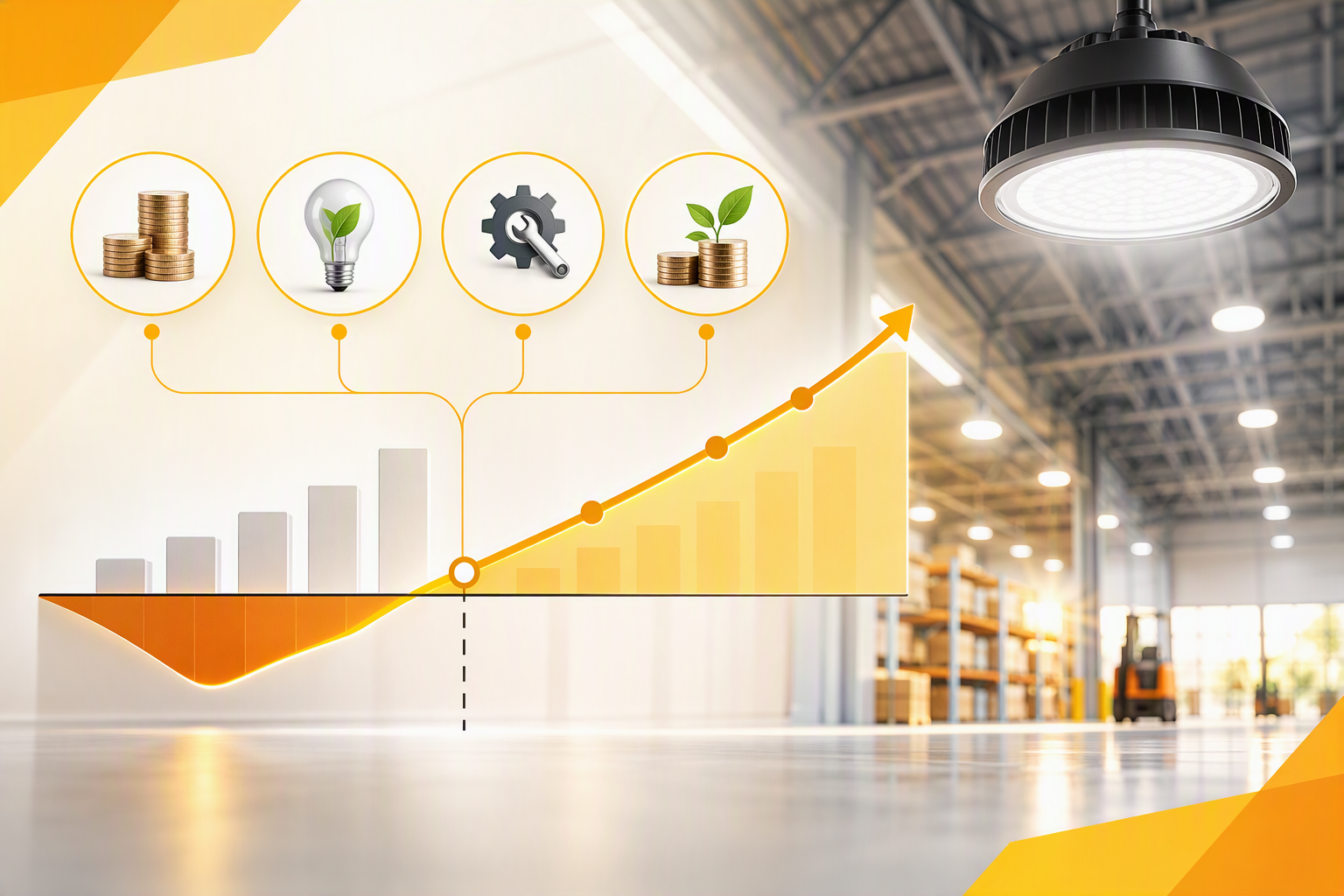
Return on investment refers to the amount of time it takes for the savings generated by new lighting to offset the cost of the conversion. To calculate it, several factors specific to your installation need to be considered:
- The initial investment, including the purchase and installation of new fixtures;
- The electricity consumption of the existing lighting compared with LED lighting;
- Maintenance costs, such as replacing tubes and ballasts, as well as labour;
- Available rebates, which can reduce the cost of the conversion.
Together, these factors make it possible to estimate how long it will take to recover the initial investment.
Why Can LED Lighting Be More Cost-Effective in the Long Run?
The cost of a LED conversion is primarily incurred at the time of purchase and installation, while the savings accumulate over the years. It is this difference between the short-term cost and longer-term savings that can make the investment worthwhile.
On average, LED lighting uses less energy than older technologies, reducing electricity costs year after year. Its longer lifespan also means fewer replacements and lower maintenance expenses. By contrast, keeping an older fixture can lead to costs that are not always considered upfront, such as replacing a ballast or another component when it fails.
Repair or Replace : A Real-World Exemple
Consider a 2 x 4 fluorescent fixture equipped with four tubes. If only the tubes need to be replaced, the expense may seem relatively low. At approximately $5 per tube, it costs around $20 to keep the existing fixture in operation.
Over time, however, other components may also need to be replaced. For example, if the 120 V ballast fails, approximately $50 must be added to the $20 cost of the tubes. The repair then comes to about $70, excluding labour costs.
By comparison, a new LED fixture may cost around $90 in this example. The difference is therefore only $20, even before taking applicable rebates into account. Once rebates are factored in, the initial cost of converting to LED may come close to the cost of repairing the existing fixture.
This is where calculating ROI becomes particularly useful. With a comparable initial cost, the new LED fixture can then provide lower energy consumption while avoiding continued investment in the aging components of the existing lighting system.
how long does it take for a Led conversion to pay for itself ?
There is no universal payback period for a LED conversion. Depending on the type of building, the number of fixtures, hours of operation and maintenance costs, ROI can vary significantly. In general, the payback period ranges from one to five years.
The more frequently a lighting system is used and the more energy it consumes, the faster the savings can add up. Maintenance costs associated with the existing installation and available rebates can also shorten the payback period.
Another factor will come into play as of October 1, 2026: an increase in environmental handling fees on certain lighting products. For example, the fee applicable to a fluorescent tube will increase from $1.00 to $2.75 per tube, an increase of $1.75. This increase narrows the cost gap between certain traditional lighting technologies and LED lighting, which can shorten the payback period for a conversion.
This is why ROI should be calculated based on the specific circumstances of each installation. A project that takes five years to pay for itself in one building could do so much more quickly in another.
Look Beyond the Purchase Price
When it comes to lighting, the least expensive option in the short term is not necessarily the one that will cost the least over time. Switching to LED is not automatically the best solution in every situation. What matters is determining when the investment becomes worthwhile based on your installation and how your lighting is used.
At Bralco, we can perform this analysis with you and calculate the ROI of an LED conversion based on your own parameters, including electricity costs, maintenance and installation expenses, and available rebates.
Take Action Today
Thinking about upgrading your lighting? Contact our team at 514-356-3222 or by email to find out whether switching to LED is the right choice for your project.
Talk to a representative